iGaming | 28 October 2026
There's a moment every slot player knows. The reels slow down, two matching symbols land, and that third one stops just short. Again. You've been grinding for an hour, your balance is shrinking, and the bonus you read about on some forum feels like a myth. Before you blame the machine, your luck, or the casino, understand this: most players lose steadily not because slots are rigged, but because they approach them like a lottery ticket instead of a math puzzle with a known cost.
This isn't another "responsible gambling" sermon. It's a practical breakdown of why the vast majority of players never see a meaningful payout, and what the small percentage who do actually do differently. Whether you're spinning for entertainment or chasing a jackpot, the difference between bleeding out and walking away ahead comes down to a handful of decisions most people never make.
Volatility Is Not a Buzzword — It's Your Entire Strategy
Ask ten casual players what RTP means and most will say "return to player, like 96%." That's correct but useless in isolation. A 96% RTP slot means that over millions of spins, the machine returns 96 cents per dollar wagered. It says nothing about what happens in your session. Two slots can both advertise 96% RTP and behave nothing alike.
This is where volatility comes in, and it's the single biggest reason players bust their bankroll before a bonus drops.
- Low volatility: Frequent small wins. A $100 bankroll can last hundreds of spins. You'll rarely double your money, but you'll rarely be wiped out in five minutes.
- Medium volatility: The balanced middle ground. Wins arrive reasonably often with decent multipliers. Slots like most NetEnt classics sit here.
- High volatility: Long dry spells punctuated by rare, massive hits. Think Money Train, San Quentin, or any Bonanza-style cluster pay. Your $100 can vanish in 40 spins, or you can hit 2,000x on spin 35.
Most players lose because they pick high-volatility slots with a small bankroll. That's like betting on a long-shot horse with your rent money. If your balance is $50, you have no business on a 10,000x max-win machine. Match your stack to the variance.
Bankroll Math: The Rule Nobody Follows
Here's a concrete example. You load $200 and play a slot with a $1 spin. That's 200 spins. At roughly 600 spins per hour, you're looking at 20 minutes of play before you're statistically dry — assuming average luck and a 96% RTP. Factor in the house edge of 4%, and your expected loss per hour is about $24 on that action. Not catastrophic. But most people don't spin $1. They spin $5, then $10 after a cold streak, chasing the loss.
The players who keep their heads above water follow a boring rule: never risk more than 1–2% of your bankroll per spin. With $200, that's $2–$4 a spin. Boring? Yes. But it buys you four or five hours of play and, critically, enough spins to actually let the math work toward a bonus trigger.
Bonus buy features change this calculus entirely. Dropping $80 on a single bonus round in Gates of Olympus is not a spin — it's a wager, and the RTP on bonus buys is often lower (sometimes 95% or less) than the base game. Treat them as entertainment purchases, not investments. A good place to continue is keonhacai.
Stop Playing Random Slots — Follow the Data
Serious players don't pick slots by thumbnail. They check three things before loading a single spin:
- Max win potential: A slot with a 5,000x cap is a fundamentally different game from one with a 50,000x cap. Know what you're chasing.
- Hit frequency: Often listed as "hit rate." A 25% hit rate means one in four spins wins something. Under 20% and you're in cold-tundra territory.
- Bonus trigger frequency: Some slots trigger free spins every 150 spins, others every 500. If you're on a 100-spin budget and the bonus hits every 400 spins, you're funding someone else's win.
Provider matters too. Studios like Pragmatic Play, Hacksaw, and Nolimit City design for high variance. Push Gaming and Relax sit somewhere in the middle. Knowing a provider's house style tells you what kind of session you're signing up for before you deposit.
Poker and Betting: The Same Leak, Different Game
The slot problems repeat themselves across every iGaming vertical. In poker, the losing players are the ones who play too many hands, chase draws without pot odds, and tilt after a bad beat. Winning players fold 75–80% of starting hands preflop in full-ring games and think in terms of equity and ranges, not gut feelings. If this is new to you, kèo bóng đá trực tuyến is a sensible next read.
In sports betting, the leak is the parlay. A three-leg parlay at +600 feels like a smart bet. Two legs might win, but the third — a -180 favorite — busts you. Bookmakers love parlays because the house edge compounds with every leg, often reaching 15–20% versus the 4–5% on a single straight bet. Sound familiar? It's the same trap as the high-volatility slot: chasing a big number with a small probability and calling it strategy.
The players who win long-term across casino, poker, and sports do one thing consistently: they accept small edges and repeat them. They flat-bet. They track results. They know their expected value before they commit money. It's unglamorous, and it's why most people never do it.
What Actually Fixes the Leak
You don't need a system. You need a filter that runs before every session.
- Set a session loss limit in the lobby before you spin. When it's hit, you stop, even if you "feel" a bonus coming.
- Choose one slot per session and commit to it — hopping between machines resets the psychological clock and increases tilt-spinning.
- Never increase your bet size after a loss. That's not a recovery strategy; it's the fastest known route to zero.
- Track your spins and deposits for one month. The number will embarrass you into better habits.
- Treat bonus buys as paid entertainment, not EV plays.
None of this guarantees a jackpot. Nothing does. But it guarantees you extract maximum playtime and the highest possible number of chances from a fixed bankroll — which is the only thing you actually control.
The Real Reason the Big Win Stays Rare
Slots are designed so that the majority of players fund the minority who hit. That's not a conspiracy; it's the mathematical structure of a game with a house edge. The players who understand this stop expecting to beat the machine and start managing the cost of playing it. They walk away with a story instead of a grudge, and occasionally — when variance turns their way — with a payout that actually matters. The difference between them and everyone else isn't luck. It's knowing which game, which bet size, and which moment to stop. Master that, and you've already won more than most people at the reels ever will.



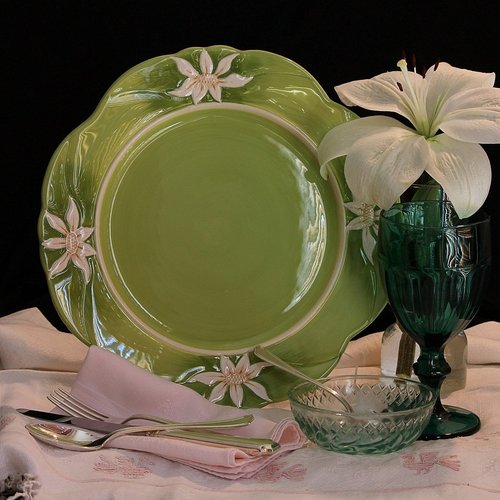































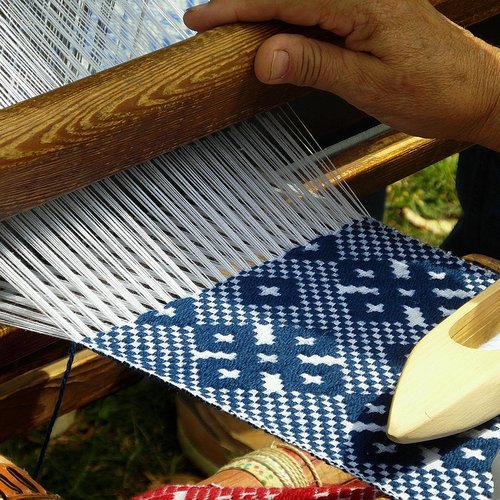
Discover how handwoven runners, placemats, and napkins can bring warmth and intention to your everyday table.
Alice Rose
Oct 1, 2026 at 3:12 pm